If you’ve driven through neighborhoods with tile streetscapes and newer re-roofs mixed in, you’ve already seen the two big questions homeowners face: which roofing materials make sense here, and which roof types will hold up long term, especially when solar may be next.
Before you decide, here are the main takeaways you’ll get from this guide:
- The most common material choices and where they typically fit
- What usually drives cost differences, not just tile versus shingles
- How underlayment and ventilation affect lifespan more than most people realize
- A simple way to plan roofing now so future upgrades do not become a costly redo later
If you want help narrowing options quickly, Shelter Roofing & Solar can help. Start on the homepage and request a free estimate.
Why Roofing Materials Perform Differently in Thousand Oaks
Roofing materials must perform under specific local conditions.
Homes in this area face:
- Prolonged ultraviolet exposure
- Long dry heat cycles
- Seasonal winter rain
- Fire rating expectations in many communities
Unlike hail-prone regions, impact resistance is rarely the deciding factor. Longevity under sun exposure and proper waterproofing are more important.
If you want deeper insight into how climate affects roofing lifespan, see our post on How Ventura County Roofs Suffer from Prolonged Sun Exposure.
Material comparison here must account for heat tolerance, underlayment durability, and maintenance expectations.
Residential Roofing Materials Commonly Installed in Thousand Oaks
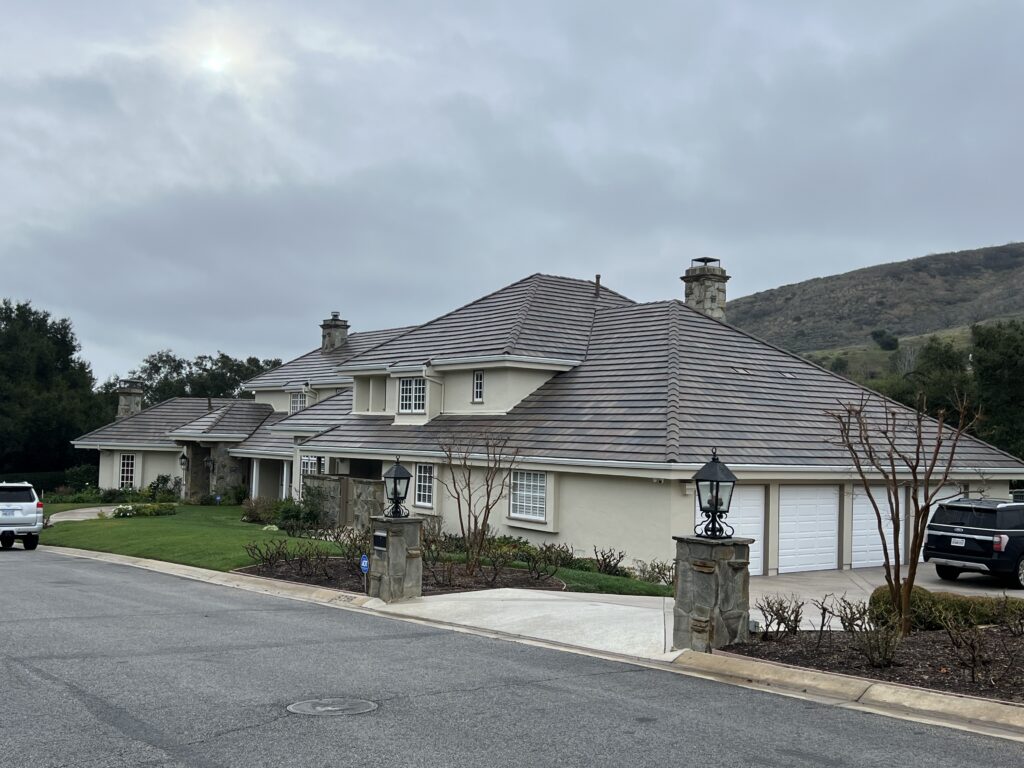
Most residential roof types locally fall into four categories:
- Three-tab asphalt shingles
- Architectural and premium asphalt shingles
- Concrete tile
- Clay tile
- Natural and synthetic slate
Each performs differently when evaluated for lifespan, weight, cost, and long-term value.
Side-by-Side Comparison of Roofing Materials and Roof Types
Three-Tab Asphalt Shingles
Lifespan: 20 to 30 years
Weight: Lightweight
Cost: Lowest upfront investment
Three-tab shingles are the most basic shingle system available. They are typically used when budget constraints are primary.
Strength:
- Affordable entry-level option
Limitation:
- Shorter service life
- Less dimensional appearance
Architectural and Premium Asphalt Shingles
Lifespan: 30 to 40 years
Weight: Lightweight
Cost: $12,000 to $25,000 typical replacement range
Architectural shingles are the most common shingle upgrade. Premium shingles offer thicker construction and enhanced wind ratings.
Strengths:
- Strong balance of cost and longevity
- Class A fire rating available
- Lighter structural load than tile
Limitations:
- Shorter lifecycle than tile
- Dependent on proper ventilation
For more on performance differences within tile systems, see The Most Popular Tile Roofs.
Concrete Tile
Lifespan: 40 years or more for surface tile
Weight: Heavy
Cost: $15,000 to $25,000 for many tile reset projects
Concrete tile dominates many local neighborhoods because of fire resistance and long-term durability.
Strengths:
- Excellent heat tolerance
- Long lifecycle potential
- Commonly HOA compliant
Limitations:
- Underlayment eventually requires replacement
- Heavier structural load
Tile roofs often outlast their waterproofing layer. That is why tile resets are common rather than full material replacement.
Clay Tile
Lifespan: Comparable to concrete tile
Weight: Heavy
Cost: Higher than concrete tile
Clay tile is often chosen for architectural consistency on Mediterranean-style homes.
Strengths:
- Long-term durability
- Distinct appearance
Limitations:
- Higher upfront cost
- Requires structural support verification
Natural and Synthetic Slate
Lifespan: 50 years or more for natural slate
Weight: Very heavy for natural slate
Cost: $25,000 and up
Slate appears primarily on custom and estate homes.
Strengths:
- Exceptional longevity
- Premium aesthetic
Limitations:
- Specialized installation required
- Higher cost
Synthetic slate reduces weight while maintaining a similar appearance.
What Actually Determines Long-Term Roof Performance
When comparing roofing materials, surface type is only one factor.
Underlayment Matters More Than Most Homeowners Realize
On tile and slate roofs, underlayment is the primary waterproof barrier. Once it deteriorates, leaks occur even if the tile appears intact.
Ventilation Controls Heat Stress
Excess attic heat accelerates aging across all roof types. Balanced ventilation improves long-term performance regardless of material.
Flashing and Detail Work Prevent Failures
Valleys, chimneys, and skylights are common leak points. Proper flashing installation significantly reduces risk.
Roofing Materials and Roof Types FAQs for Thousand Oaks Homeowners
Choosing between roofing materials often raises specific performance and cost questions. Below are direct answers based on local experience.